
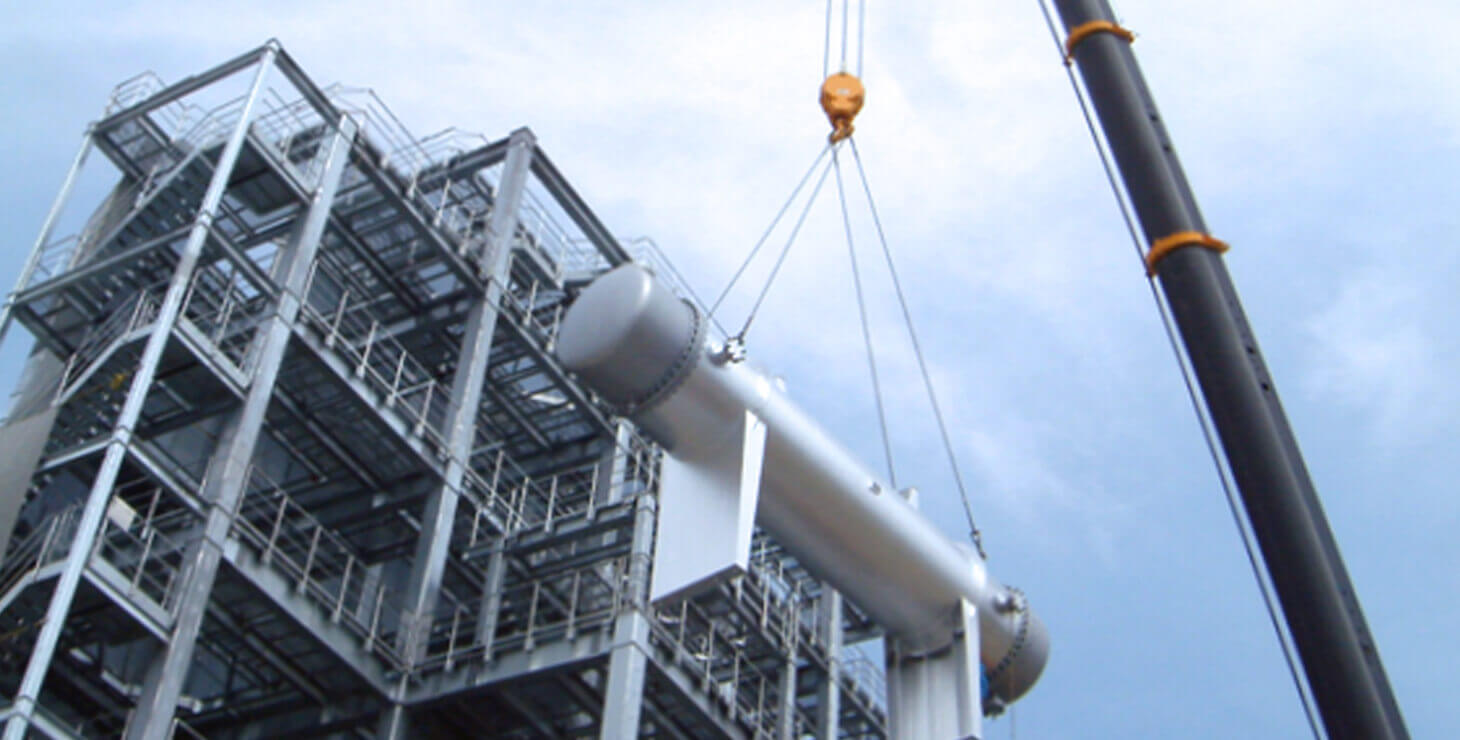
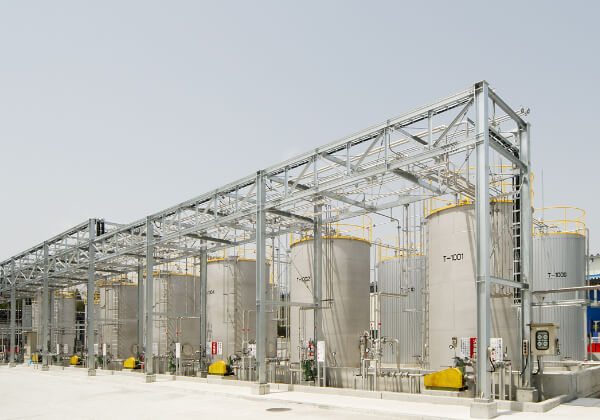
日本化学機械製造株式会社は、化学機器を自社工場にて製造できるプラントエンジニアリング企業です。
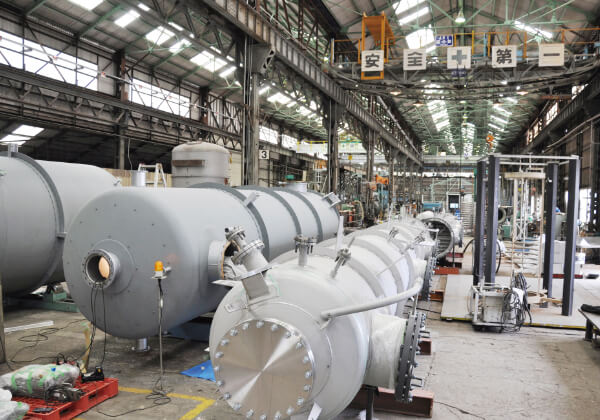
自社工場は、高圧ガス設備、圧力容器、また特殊材(耐食材料)の製作も可能で、材料手配から納入まで一括管理を行っています。プラントは様々な装置、機器類の組み合わせで構成されており、エンジニアリングには多くの知識と経験が必要とされます。
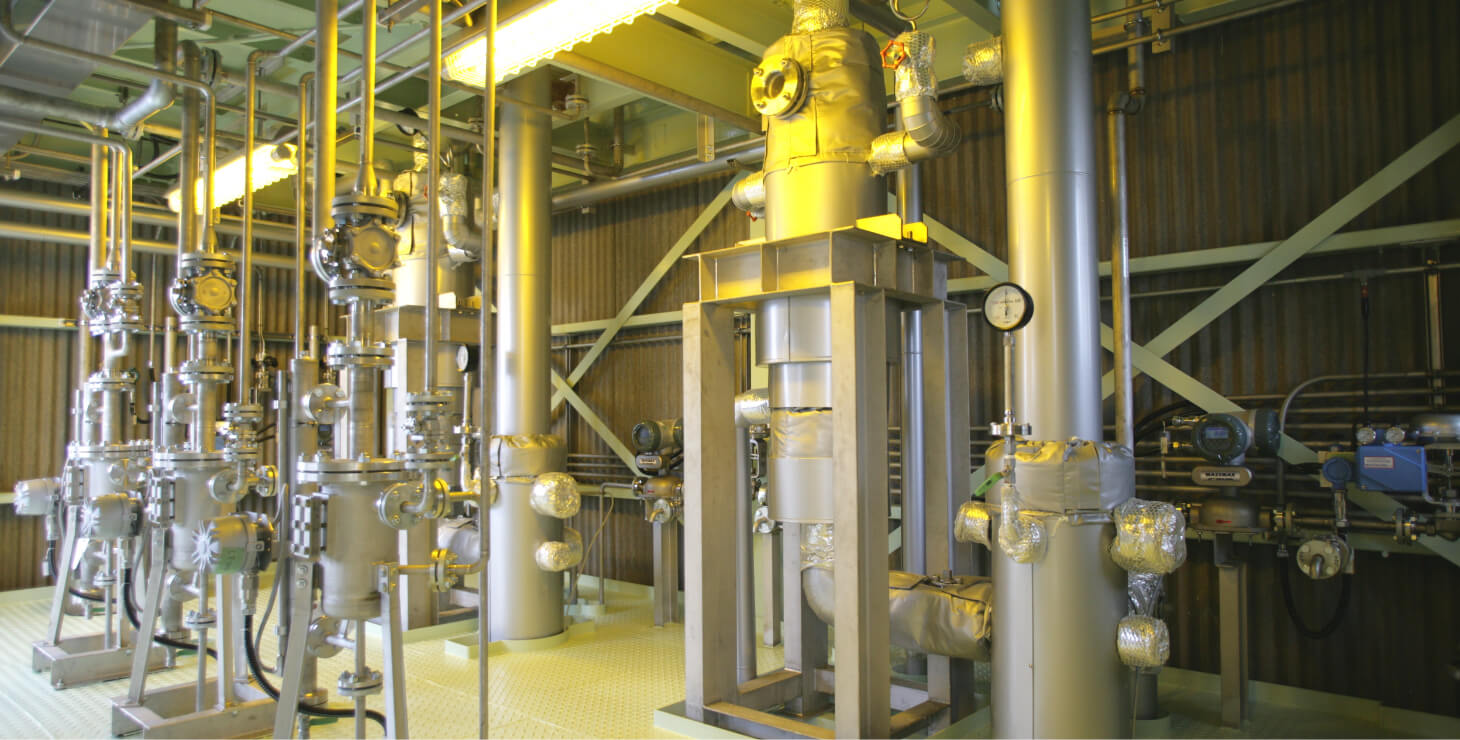
また、時代背景?外部環境の変化に伴いプラントに対するお客様のニーズも多種多様に変化しています。 設備の抱える様々な問題の解決、省エネルギー、環境対策、生産効率、品質向上、新製品生産のプロセス構築?設備計画の具現化によりお客様の事業価値向上の一助となるべく、最新の技術の開発、活用に努めております。 常にお客様の立場になり、安全で効率的な設備の構築を念頭に取り組んでおります。
-
THREE:[See larger version]Almost immediately on the meeting of the House of Commons, Welbore Ellis demanded whether a return had been made for Westminster, and being answered in the negative, moved that Mr. Corbett, the high bailiff, with his assessor, should attend the House; and the next day, February 2nd, Colonel Fitzpatrick presented a petition from the electors of Westminster, complaining that they were not legally and duly represented. In fact, the scrutiny had now been going on for eight months, and as not even two of the seven parishes of Westminster were yet scrutinised, it was calculated that, at this rate, the whole process would require three years, and the city would, therefore, remain as long unrepresented. The high bailiff stated that the examinations, cross-examinations, and arguments of counsel were so long, that he saw no prospect of a speedy conclusion; and Mr. Murphy, his assessor, gave evidence that each vote was tried with as much[310] form and prolixity as any cause in Westminster Hall; that counsel¡ªand this applied to both sides¡ªclaimed a right to make five speeches on one vote; and that propositions had been put in on the part of Sir Cecil Wray to shorten the proceedings, but objected to on the part of Mr. Fox.
経験と実績をもとに、お客様のニーズに応じた最適な仕様?システムを構築、ご提案いたします。
-
THREE:The style of St. Paul's, and, indeed, of all Wren's churches, is neither Grecian nor Gothic, but Italian, influenced by the fashion which Bernini, the Italian architect of Louis XIV., had introduced into France. It is a class of architecture of which the Grecian is the basis, but which is so freely innovated upon as to leave little general resemblance. In its different parts we have columns and pilasters of every Grecian and, indeed, Roman order, pediments, peristyles, architraves, and friezes, mingled up with windows of all sorts, and all kinds of recesses and projections, the fa?ades and intercolumniations ornamented with festoons, and wreaths, and human masks, and the whole surmounted by a great Eastern dome, and by campaniles partaking of[159] all the compilations of the main buildings. St. Paul's itself is a noble building, notwithstanding the manifest gleanings from the antique and the medi?val, and their combination into a whole which has nothing original but their combination into one superb design. Besides St. Paul's, the rest of Wren's churches are disappointing, and we cannot avoid lamenting that he had lost the sense of the beauty of Gothic architecture, especially when we call to mind the exquisite churches of that style which adorn so many of the Continental cities. Whilst the exteriors of Wren's churches show heavily in their huddled-up situations in London streets, their interiors, in which much more of the Grecian and Roman styles is introduced, are equally heavy, and wanting in that pliant grace which distinguishes the interiors of Gothic cathedrals. Perhaps the noblest work of Wren next to St. Paul's is Greenwich Hospital, which is more purely Grecian, and therefore displays a more graceful and majestic aspect. The Palace of Hampton Court, attached to the fine old Tudor pile of Cardinal Wolsey, is a great square mass, in which the Dutch taste of William is said to have set aside Wren's original design. But surely William did not compel him to erect that (in such circumstances) ponderous barbarism of a Grecian colonnade in the second quadrangle of Hampton Court, attaching it to a Gothic building. In fact, neither Wren nor Inigo Jones appears to have had the slightest sense of the incongruity of such conjunctions. Jones actually erected a Grecian screen to the beautiful Gothic choir of Winchester Cathedral, and placed a Grecian bishop's throne in it, amid the glorious canopy-work of that choir. The return to a better taste swept these monstrosities away.
工場建屋、事務所棟、倉庫、試験棟などの建設も一括してご依頼いただけます。
-
THREE:Mr. Williams, made Baron of the Exchequer 3,300
環境に配慮し、コストメリットを勘案した、省エネルギーで、省スペースな設備をご提案いたします。
-
THREE:But amid the discouragements of monetary legislation, which showed that it would require a determined contest to compel Ministers to retrench, there were symptoms of a spirit of legal and social reform amongst Parliamentary men generally which augured the approach of better times. Mr. Sturges Bourne obtained the passing of his long-advocated Poor Law Bill; but Bills for regulating settlements, and for preventing the misapplication of the poor rates, were thrown out. A Bill was passed to regulate the treatment of children in cotton factories, and to limit the hours of their employment. Mr. Brougham's Act for inquiry into the charitable foundations of England was extended, with the support of Government, so as to apply to educational as well as to all kinds of charities, except such as had special visitors, or were maintained by private subscriptions. Sir James Mackintosh also took up the humane track of labour occupied so nobly by the late Sir Samuel Romilly. On the 2nd of March he moved for the appointment of a select committee to take into consideration the subject of capital punishment as regarded felonies. This was eminently needed, for the penal laws during the reign of George III. were truly Draconian. Notwithstanding a strong opposition by Ministers, the motion was carried, amid much cheering, and on the 6th of July Sir James Mackintosh introduced the report, which[146] was ordered to be printed. Government, as if to wipe out their disgrace in resisting so humane a measure, now proposed an inquiry into the condition of gaols and other places of confinement, and into the best method of employing and reforming delinquents during their imprisonment. Some reforms were made in Scottish law. The old rights of trial by battle, and of appeals of murder, felony, or mayhem, were abolished as rendered unnecessary by the full exercise of the institution of jury, and as belonging only to a barbarous age. The severity of the Scottish law against duels was mitigated, that law pronouncing forfeiture of all movable property, and banishment against all persons sending, or even carrying, a challenge to fight a duel. The principle of that law was sound, but its severity was its own defeat. A more questionable Bill was one carried, after much opposition, called the Foreign Enlistment Bill, which was intended to check the aid of Englishmen in assisting the Spanish South American colonists in throwing off the oppressive government of the mother country. Numbers of Englishmen were engaged on the side of independence, and this Bill was vainly intended to put an end to that generous aid.
高圧ガス設備、圧力容器の製造資格を持った自社工場での製作により、品質、納期を管理しております。
-
THREE:Lord Anglesey replied to these sharp rebukes with great spirit. "Up to this moment," he said, "I have been left entirely in ignorance, not only as to your intentions with regard to this country, but also as to your sentiments regarding my policy. They are now developed, and I shall know how to act." He then entered into details of all the occurrences alluded to, in order to show "how entirely his Majesty had been misinformed." Having done so, he added, "If those who arraign my conduct will obtain information from an uninterested source, I feel the most perfect confidence that I shall obtain the applause of my Sovereign, and the goodwill and good opinion of his Majesty's Ministers with whom I serve." He denied that the Government had lost its power, that the Association had usurped its functions, or that the laws were set at defiance. He asserted, on the contrary, that the law was in full vigour; and if it authorised, or expediency demanded, the suppression of the Catholic Association and of the Brunswick Clubs, and the disarming of the yeomanry at the same time, he would undertake to effect it almost without the loss of a life. But he did not think such a course expedient, and he deprecated the teasing system of attacking every minor offence, of which the issue upon trial would be doubtful, and which would produce irritation without effecting a salutary lesson and permanent good. He had no object, he said, in holding his post but that of pleasing his king and serving his country; and if, in his zealous and unwearied efforts to effect the latter object, he had incurred the displeasure of the king and lost his Majesty's confidence, he ought not to remain in Ireland. He was therefore ready to depart whenever they found it convenient to recall him. The Duke became testy under this resistance and antagonism. In replying to the last letter he becomes more personal in his accusations. "I might," said the Premier, "at an earlier period have expressed the pain I felt at the attendance of gentlemen of your household, and even of your family, at the Roman Catholic Association. I could not but feel that such attendance must expose your Government to misconstruction. I was silent because it was painful to mention such things; but I have always felt that if these impressions upon the king's mind should remain¡ªand I must say that recent transactions have given fresh cause for them¡ªI could not avoid mentioning them to you in a private communication, and to let you know the embarrassment which they occasion."
コストを積算し、見積価格をご提示します。回収期間法などの設備投資の経済性計算をお客様とご一緒にシミュレーションすることも可能です。
-
THREE:
化学工場への納入実績が多く、各種法規にも精通しています。官庁申請書類の作成もサポートいたします。
-
THREE:THE DUKE OF WELLINGTON. (After the Portrait by Sir Thomas Lawrence.)
社内に様々なテスト装置をそろえておりますので、事前の検証も可能です。
新製品の生産プロセスの構築もご相談ください。
プラントの計画時から、設計、調達、建設、試運転、更には完成後のメンテナンスに至るまでトータルに対応いたします。当社は機器製作工場を所有しておりますので、細やかな機器設計?製作が可能です。
-
 FORE:Another attempt of the French to draw the attention of Wellington from Massena was made by Mortier, who marched from Badajoz, of which Soult had given him the command, entered Portugal, and invested Campo Mayor, a place of little strength, and with a very weak garrison. Marshal Beresford hastened to its relief at the head of twenty thousand men, and the Portuguese commandant did his best to hold out till he arrived; but he found this was not possible, and he surrendered on condition of marching out with all the honours of war. Scarcely, however, was this done when Beresford appeared, and Mortier abruptly quitted the town, and made all haste back again to Badajoz, pursued by the British cavalry. Mortier managed to get across the Guadiana, and Beresford found himself stopped there by a sudden rising of the water and want of boats. He had to construct a temporary bridge before he could cross, so that the French escaped into Badajoz. Mortier then resigned his command to Latour Maubourg, and the British employed themselves in reducing Oliven?a, and some other strong places on the Valverde river, in the month of April. Lord Wellington made a hasty visit to the headquarters of Marshal Beresford, to direct the operations against Badajoz, but he was quickly recalled by the news that Massena had received reinforcements, and was in full march again to relieve the garrison in Almeida. Wellington, on the other hand, had reduced his army by sending reinforcements to Beresford, so that while Massena entered Portugal with forty thousand foot and five thousand cavalry, Wellington had, of British and Portuguese, only thirty-two thousand foot and about one thousand two hundred horse. This force, too, he had been obliged to extend over a line of seven miles in length, so as to guard the avenues of access to Almeida. The country, too, about Almeida was particularly well adapted for cavalry, in which the French had greatly the superiority. Notwithstanding, Wellington determined to dispute his passage. He had no choice of ground; he must fight on a flat plain, and with the Coa flowing in his rear. His centre was opposite to Almeida, his right on the village of Fuentes d'Onoro, and his left on fort Concepcion.The motion was seconded by Mr. Grote. When he had concluded, Lord Althorp rose and moved that the House should be adjourned until the 2nd of June. The differences in the Cabinet had now reached their crisis. It was fully expected that Mr. Ward's motion would be carried, and Ministers differed as to whether the principle involved in it should be rejected or accepted; the majority were for accepting it, whereupon Mr. Stanley, Sir James Graham, Lord Ripon, and the Duke of Richmond resigned their offices. They were succeeded by Mr. Spring-Rice, as Colonial Secretary; Lord Auckland, as First Lord of the Admiralty; the Earl of Carlisle, as Lord Privy Seal; Mr. Abercromby, as Master of the Mint. Mr. Poulett Thompson became President of the Board of Trade, and the Marquis of Conyngham Postmaster-General.
工場建設、プラント新設の計画の立案には、大きな労力を要します。当社では、お客様の一助となるべく、官庁届け出の助成を行いながら、工場建設を進め、抱えておられる問題の解決に取り組んでおります。
-
 FORE:Soult, on the retreat of Sir John Moore, had taken possession of Ferrol, Bilbao, and the other principal towns in the north of Spain. He had then entered Portugal, and had marched to Oporto, which he took after a resistance of only two days; and Sir J. Cradock had retired to Lisbon. Soult was prevented from advancing farther by the rising of the Spaniards behind him in Galicia, who retook Vigo and other places; whilst Silviera, the Portuguese general, interposed between him and Galicia, and formed a junction with the Spaniards. Wellesley determined to expel Soult from Oporto, and did not hesitate to say that the French general could not long remain in Portugal. Leaving a division in Lisbon to guard the eastern frontiers of Portugal against the forces of Victor, who lay in Spanish Estremadura, Sir Arthur advanced towards Oporto with a celerity that astonished the French. He quitted Lisbon on the 28th of April, reached Coimbra, driving the French before him, and on the 9th of May he was advancing from that city on Oporto. By the 11th he was occupying the southern bank of the Douro, opposite to that city. Soult had broken down the bridges and sent away the boats, so that he might be able to retire at leisure into Galicia; but Sir Arthur managed to send across General Murray with a brigade, a few miles above Oporto, and a brigade of Guards also passed at the suburb of Villanova, and he discovered sufficient boats to carry over his main army just above the town. The French commenced a fierce attack on the British forces as they landed; but the first battalion, the Buffs, got possession of a large building called the Seminario, and held it till the other troops arrived. Major-General Hill soon brought up the 48th and 66th regiments; General Sherbrooke, who crossed the river below the town with the brigade of Guards and the 29th regiment, entered the town amid the acclamations of the people, and charged the French in the rear; and General Murray, about the same time, showed himself on the French left, above the town. Soult fled, leaving behind him his sick and wounded, and many prisoners, besides much artillery and ammunition. This taking of Oporto, in the face of a French force of ten thousand men, coupled with his having to cross the broad Douro, and that with very defective means of transit, was a most brilliant affair; and the most astonishing thing was, that Wellesley lost only twenty-three killed and ninety-eight wounded, whilst Soult's troops suffered severely.
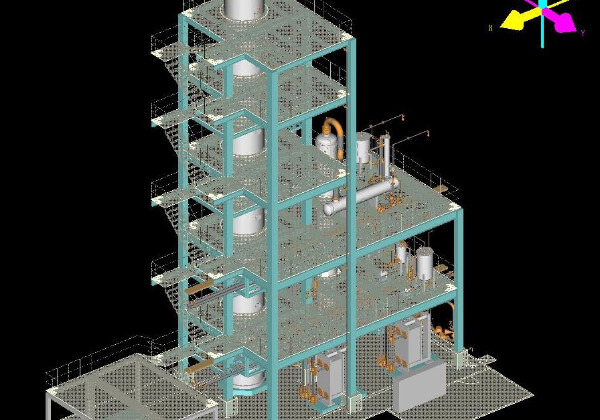
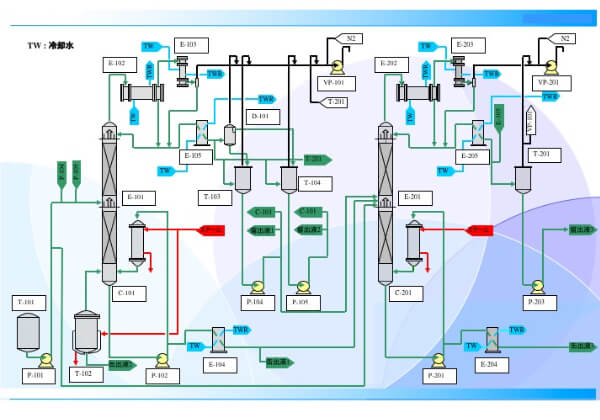
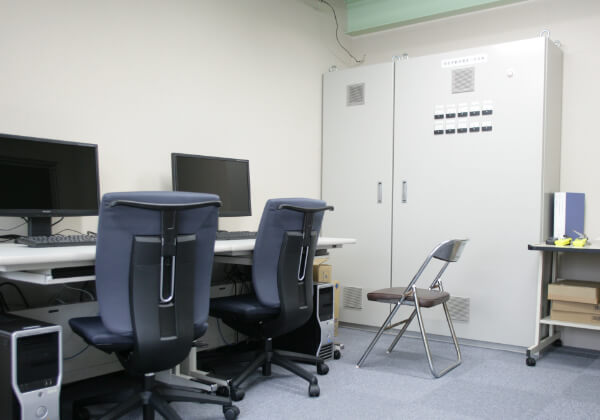
主要機器等の仕様を決定し、プラントの基本フローや配置を決定します。
-
 FORE:Thomas Moore, the poet, in the latter period of his life, published several biographical works¡ªnamely, a "Life of Richard Brinsley Sheridan," in 1825; "Notices of the Life of Lord Byron," in 1830; and "Memoirs of Lord Edward Fitzgerald," in 1831. Byron had written memoirs of his own life, which he presented to Moore, and by the publication of which a very large sum of money could have been made; but Moore generously placed the MS. at the disposal of Mrs. Leigh, the poet's sister and executrix; and from a regard to his memory, they were consigned to the flames. It is supposed, however, that all that was valuable in them was found in the noble lord's journals and memorandum-books. Among literary biographies¡ªa class of publications highly interesting to cultivated minds¡ªthe first place is due to Lockhart's "Life of Sir Walter Scott," a work that ranks next to Boswell's "Life of Johnson."
設備の構成要素の詳細な仕様や配置を決定し、図面を作成します。
-
 FORE:[See larger version]Mr. Vandeleur, made judge of Queen's Bench 3,300
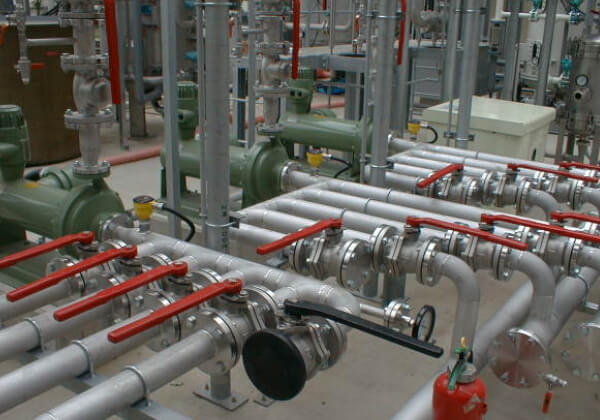
詳細設計に基づきポンプや部品類の購入品の調達先を選定し、発注します。
プラントを構成する主要な機器は特注製作が多く、材料発注、製作、各種検査、運搬まで工程、納期を管理します。 -
 FORE:VIEW IN DRESDEN.In the meantime the Irish State trial, and the affairs of Ireland generally, were the subject of frequent discussions in both Houses of Parliament. On the 13th of February the Marquis of Normanby moved a resolution condemnatory of the policy of the Government, contrasting it with his own Administration, with the treatment of Canada, and with the liberal policy by which, he said, Austria had conquered disaffection in Lombardy. He was answered by Lord Roden and others, and on a division his motion was rejected by a majority of 175 to 78. On the same day the state of Ireland was introduced by Lord John Russell, in a speech which occupied three hours. The debate that followed lasted for nine days. The principal speakers who took part in it were Mr. Wyse, Sir James Graham, Mr. Young, Sir George Grey, Lord Eliot, Mr. Shaw, the Recorder of Dublin, Lord Howick, Lord Stanley, Mr. Macaulay, Sir William Follett, Sir Thomas Wilde, Sir F. Pollock, the English Attorney-General, Mr. Roebuck, Mr. O'Connell, Mr. Sheil, and Sir Robert Peel. The discussion turned mainly upon the question whether or not O'Connell had had a fair trial, and upon this the lawyers and the House pronounced opinions in harmony with the interests of their respective parties. But nearly every topic that could be mentioned was brought up in the course of the monster debate. Sir Robert Peel concluded a long and able speech in defence of his Government with the following beautiful peroration:¡ª"I have a firm conviction that if there were calm and tranquillity in Ireland, there is no part of the British empire that would make such rapid progress in improvement. There are facilities for improvement and opportunities for it which will make the advance of Ireland more rapid than the advance of any other country. I will conclude, then, by expressing my sincere and earnest hope that this agitation, and all the evil consequences of it, may be permitted to subside; and hereafter, in whatever capacity I may be, I should consider that the happiest day of my life when I could see the beloved Sovereign of these realms fulfilling the fondest wishes of her heart, possessing a feeling of affection towards all her people, but mingling that[535] affection with sympathy and tenderness towards Ireland. I should hail the dawning of that auspicious day, when she could alight like some benignant spirit on the shores of Ireland, and lay the foundations of a temple of peace; when she could, in accents which proceeded from the heart¡ªspoken to the heart rather than to the ear¡ªcall upon her Irish subjects of all classes and of all denominations, Protestants and Roman Catholics, Saxon and Celt, to forget the difference of creed and of race, and to hallow that temple of peace which she should then found, with sacrifices still holier than those by which the temples of old were hallowed¡ªby the sacrifice of those evil passions that dishonour our common faith, and prevent the union of heart and hand in defence of our common country."
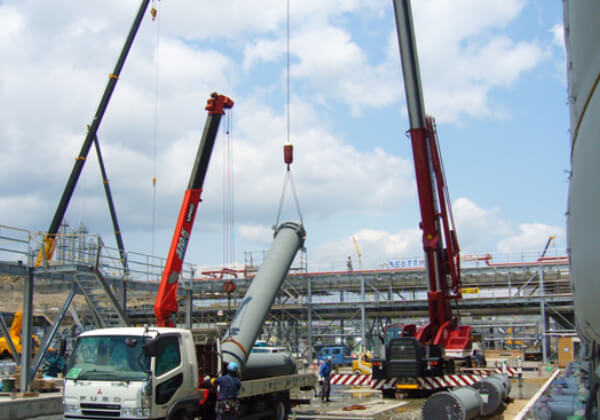
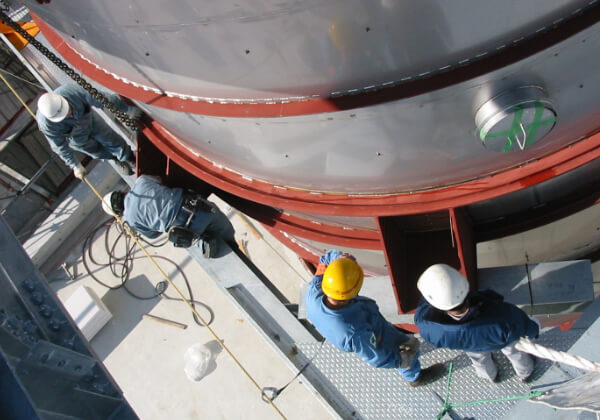
安全を第一に、管理技術者が責任を持って施工、工程、品質の管理を行いながら協力会社と連携し進めていきます。
土木?建築、機器据付、配管、電気?計装、断熱などの工事があります。 -
 FORE:
FORE:プラント完成後、性能が出るか試運転を行って確認、調整を行います。
きめ細やかな運転指導により実運転へのスムースな移行を促します。完成図書と共にお引渡しとなります。
運転?保守フェーズ
-
 FORE:The amended copy of the proposed tariff was laid on the table of the House of Commons on the 5th of May; and its details explained by the Premier in a speech which served to bring out still more strongly the anomalous position in which he was placed. His speech was a long elaborate statement distinguished for its excellent temper, its clearness, and, above all, by its singularity as delivered by the Conservative leader. He went over all the sections of his subject, showing how the removal of prohibitions would benefit everybody; how the reduction of duties on raw materials would stimulate trade; how the diminished duties on provisions would make living cheaper for all; and how the lesser protection to manufactures would injure none. Such, he said, were the grounds of the change which it was his intention to carry through; adding, "I know that many gentlemen who are strong advocates for Free Trade may consider that I have not gone far enough. I believe that on the general principle[489] of Free Trade there is now no great difference of opinion, and that all agree in the general rule that we should purchase in the cheapest market and sell in the dearest." Loud cheers from the Opposition benches here interrupted him. Turning in the direction of the cheerers, he said, "I know the meaning of that cheer. I do not now wish to raise a discussion on the Corn Laws or the sugar duties. I have stated the grounds, on more than one occasion, why I consider these exceptions to the general rule, and I will not go into the question now. I know that I may be met with the complaints of gentlemen opposite of the limited extent to which I have applied the general principle to which I have adverted to these important articles. I thought, after the best consideration I could give to the subject, that if I proposed a greater change in the Corn Laws than that which I submitted to the consideration of the House, I should only aggravate the distresses of the country, and only increase the alarm which prevailed among important interests. I think that I have proposed, and the Legislature has sanctioned, as great a change in the Corn Laws as was prudent, considering the engagements existing between landlord and tenant, and also the large amount of capital which has been applied to the cultivation of the soil. Under these circumstances, I think that we have made as great a change as was consistent with the nature of the subject."
プラント、機器の安全と安定稼働のために、定期的なメンテナンスをお薦めいたします。
-
 FORE:Within a few days of taking Philadelphia, Lord Howe raised three batteries on the side of the river. On the 3rd of October Washington issued from his camp on the Schuylkill, about fourteen miles from Germantown, having heard that two British detachments had been withdrawn thence to attack the forts on the Delaware. He had been reinforced by militia from Maryland and New Jersey, and determined to surprise the British camp at Germantown. Two columns of Continental troops, led by Greene and Sullivan, were to gain the front of the British, and attack it; whilst two other columns of militia were to attack the rear. This force marched all night, and entered Germantown about sunrise, and all seemed likely to favour their enterprise. A fog prevented the discovery of their approach. But, at the first surprise, Colonel Musgrove threw himself into a storehouse, and kept up such a fire from the windows as checked the assault of the Americans, and gave time for the rest of the British force to get under arms. The village of Germantown consisted of one long street. Across this street the British army had encamped, and stoutly resisted the advance of the Americans. Musgrove was summoned to surrender; but he continued his fire from the house without taking any notice, and, before artillery could be brought up to batter the house, General Greig and Brigadier Agnew came up to his assistance. The Continental troops in front, led on by Washington himself, made a brisk attack, but were repulsed at all points, and were badly co-operated with by the militia in the rear. Washington was compelled to fall back to his camp at Skippack Creek, leaving behind him about eight hundred killed and wounded, and four hundred prisoners. So far, however, was Sir William Howe from availing himself of this opportunity to follow up the attack on Washington, and disperse his army, that he, as usual, thought only of getting into snug winter quarters.
生産量を減らすことなく、生産能力を増強するなど、お客様のご要望にお応えできるソリューションをご提案いたします。
お客様のプロセスノウハウと当社の固有技術の融合によって最適化、効率化、さらには環境に優しい設備を実現をいたします。海外現地法人(タイ、ベトナム)におきましても同等のエンジニアリングが提供できるように、本社の技術者と連携し管理いたしております。
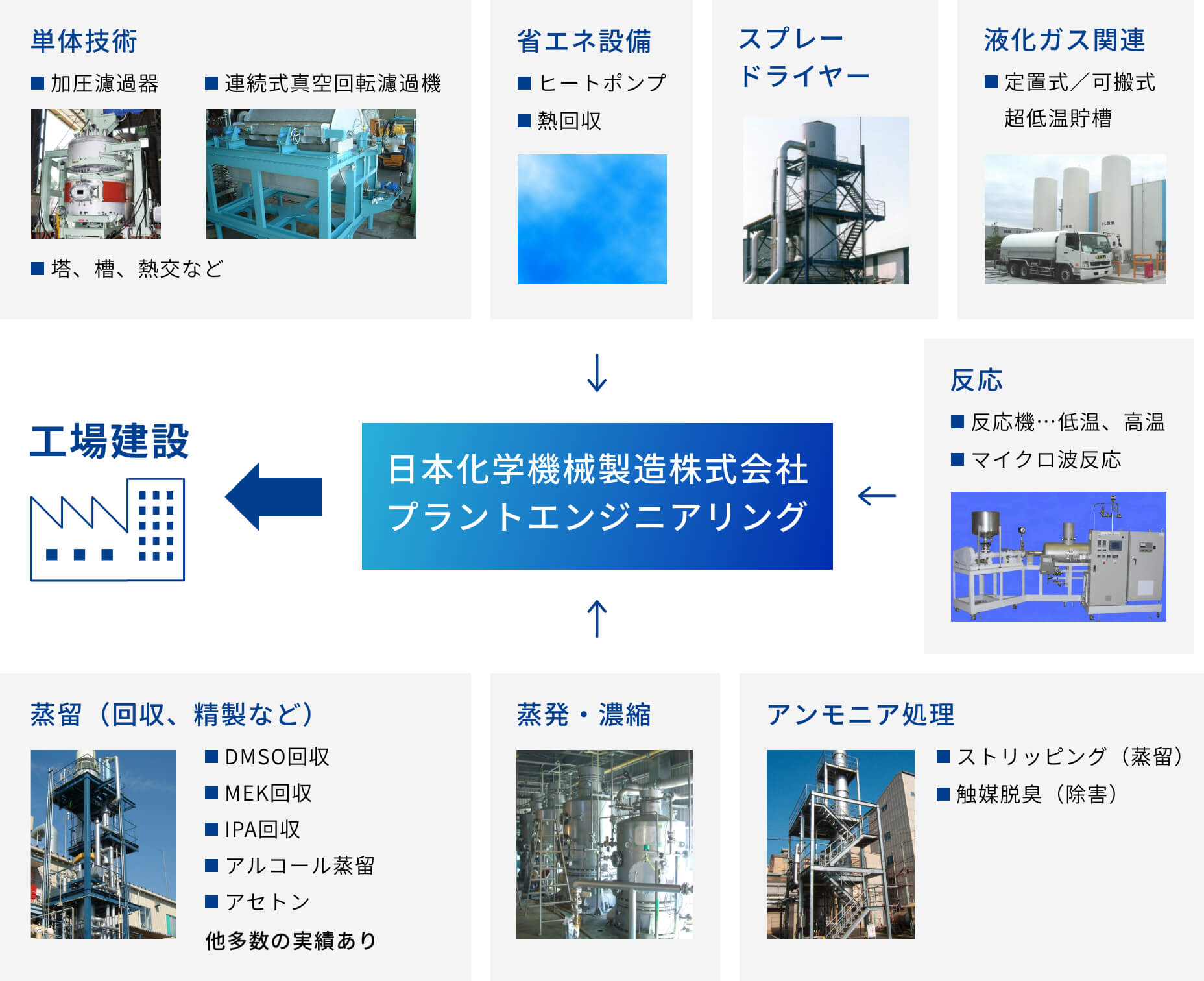
※これ以外にも様々な単位操作装置、単体機器製作ができます。
| 業種?分野 | プラント?設備名称 | 構成プロセス | 付帯設備?工事施工 |
|---|---|---|---|
| ファインケミカル | IT関連化学品プラント | 反応プロセス ろ過分離プロセス 乾燥プロセス |
クリーンルーム、充填、タンクヤード、 ユーティリティ、消火?防火設備、 土木?建築、計器?計装工事、 電気工事 |
| 食品工業 | 澱粉工場 | 反応プロセス 分離プロセス 精製プロセス 脱水?乾燥プロセス |
タンクヤード、ユーティリティ、 消火?防火設備、土木?建築、 計器?計装工事、電気工事、 原料受入?貯蔵設備、計量?包装設備 |
| 化学工業 | 合成樹脂工場 > | 反応プロセス 蒸留プロセス 濾過分離プロセス 乾燥プロセス |
タンクヤード、ユーティリティ、 供給設備、充填、自動倉庫、 焼却設備、出荷設備 |
| 食品工業 | 糖化工場 > (異性化糖類製造設備) |
液化?糖化プロセス 濃縮プロセス 濾過?精製プロセス |
タンクヤード、ユーティリティ、 土木?建築、計器?計装工事、 電気工事 |
| 環境?リサイクル | 溶剤回収プラント | 濃縮?調整プロセス 蒸留プロセス |
タンクヤード、計量設備、 ユーティリティ、消火?防火設備、 計器?計装工事、電気工事、 原料受入?貯蔵?出荷設備 |
| 無機化学工業 | 触媒製造プラント (自動車用) |
調合プロセス コーティングプロセス 焼成プロセス |
ロボット搬送システム、 原料調整?供給装置 |
| 無機化学工業 | 二次電池用原料 精製プラント |
調整プロセス 反応プロセス 分離?濃縮プロセス 蒸留プロセス |
タンクヤード、ユーティリティ、 土木?建築、空調設備、集塵?局所排気、 計器?計装工事、 電気工事、貯蔵設備、計量?包装設備 |
| 新エネルギー | バイオエタノール 大型実証モデルプラント > |
蒸留プロセス 脱水プロセス |
計器?計装工事、電気工事 |
| 無機化学工業 | 水素回収設備 | 水素回収プロセス | タンクヤード、冷却システム、 計器?計装工事 |